Selling Your School: How to Make Your Campus Work for the Deal
When owners picture selling their school, they think about enrolment, earnings, and reputation. The campus is just where the school happens. In a sale, it's much more than that. Whether you own your campus or lease it, the property is an asset you can put to work, and handled well, it strengthens your position with buyers.
After many years at the deal table, here is what I tell every owner. Your campus is part of the deal, not a backdrop. Owners who plan around it come to market in a stronger position.
Does owning your campus add to what your school is worth?
Yes, and it's one of the most powerful assets an owner brings to a sale.
Owning gives you two assets instead of one. The operating school is valued on its earnings. The real estate is valued on its own terms, on what the land and buildings are worth and what an investor will pay for the income they produce. A good process values both properly, so you capture the full worth of each rather than letting one disappear inside the other. For more on how buyers build the operating number, see how a private school is actually valued.
One thing to get right early so you capture that full value: your rent. If you own the campus through a holding company and charge the school little or no rent, your profit looks stronger than it really is, and a buyer will re-base a fair market rent against your earnings when they value the operating side. That isn't a problem, it's just arithmetic. Knowing your true market rent before you go to market means the numbers hold no surprises and you present both assets at their real worth.
How does owning your campus widen the buyer pool?
Owning brings an entirely new category of buyer to the table, and more buyers is how price is won.
Alongside operators who want a going concern, an owned campus draws real estate investors and trusts who want the property with a school tenant already in place, plus buyers who want both together. An owned campus reads as an asset-backed investment, which appeals to private equity, high-net-worth buyers, and international operators looking for something more solid than goodwill alone. It's common for a business buyer to pair with a real estate partner, one taking the operations and the other taking the building on a long lease. Five different buyer types shop for private schools, and owning your campus opens the door to more of them.
What are your options if you own the campus?
Three main paths, and the right one depends on what you want the day after closing.
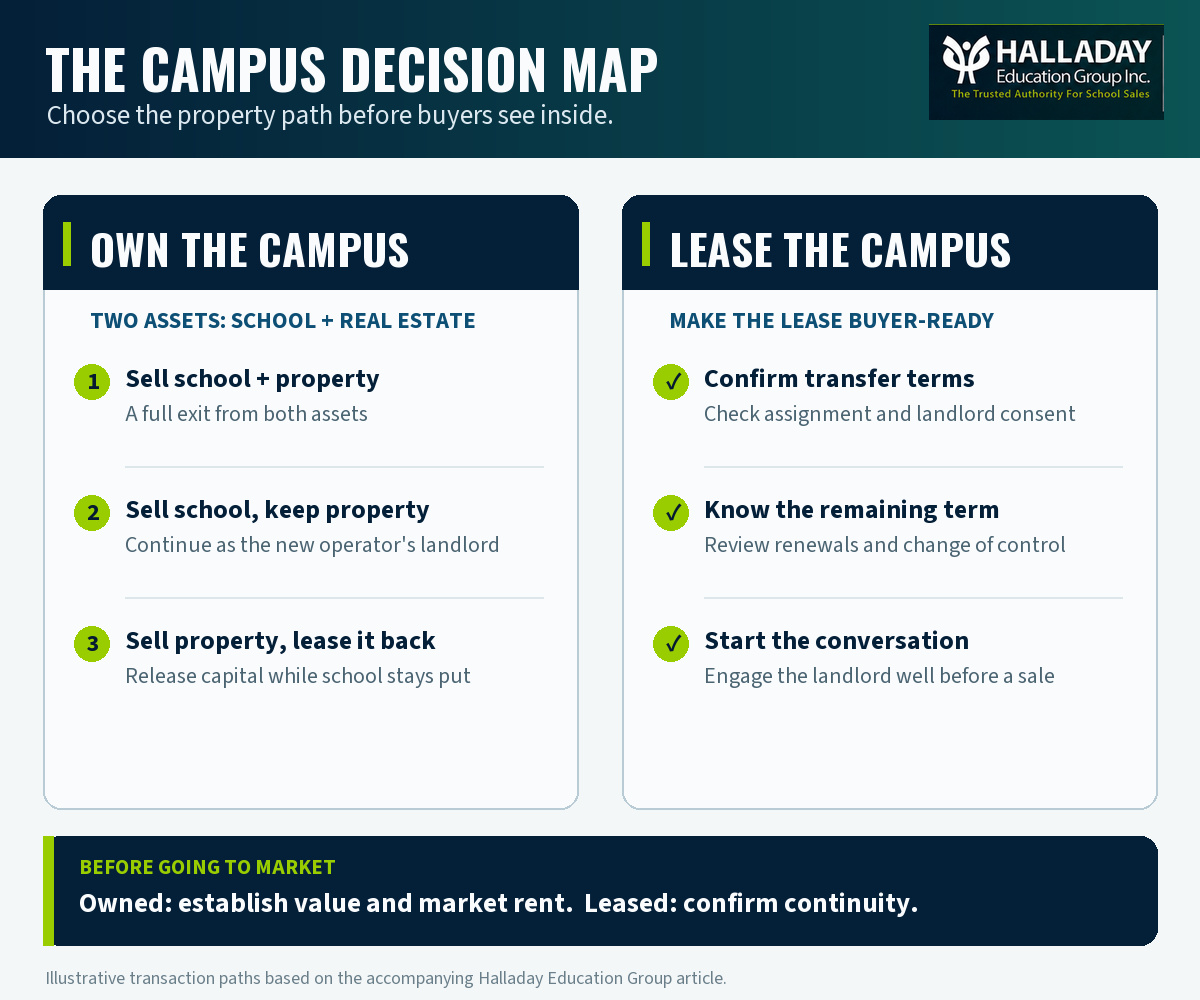
Sell the business and the property together. The cleanest route for many owners. One buyer, or an operator and a real estate partner working as a pair, takes both, and you walk away fully.
Keep the property, sell the business, become the landlord. Sell the school and hold the real estate, collecting rent from the new operator. Done right, it's steady income into retirement. The key is to set a genuine market lease and go in understanding what being a landlord involves, so the arrangement works well for both sides over the long term.
Do a sale-leaseback. Sell the campus to a net-lease investor or a real estate trust, lease it back on a long-term basis, and keep operating. This frees the capital tied up in the buildings while the school stays exactly where it is. It's a well-established structure at the top of the market. In 20,16; the premium schools group Nord Anglia sold three US prep-school campuses to the real estate trust W. P. Carey for about $167 million and leased them back for 25 years, with the buyer also committing to fund expansions. The schools never moved. For the mechanics of splitting property from operations, see PropCo and OpCo structures.
What if you lease your campus?
Then your lease is one of your most useful assets in the sale, and a little preparation turns it into a real strength.
Buyers need to know the school can keep operating in its home, so a clean, transferable lease with solid term remaining gives them confidence and supports your price. Getting there is mostly about doing a few things ahead of time. Read your lease and confirm you can assign it to a buyer, and on what terms. Check whether the landlord's consent is needed and whether a change of control is treated as an assignment, since that can apply even in a share sale. Note the remaining term, the renewal options, and any personal guarantee you've given, so you know exactly where you stand and can seek a release at closing.
The most important factor is timing. Open the conversation with your landlord early, well before a sale, so consent and any term refreshes are handled calmly rather than under deadline pressure. A lease you've put in good order ahead of time is an asset that works for you, not a question mark a buyer has to work around.
What should you do before you go to market?
Settle the property question first, because it shapes who you should be talking to.
If you own, get a real estate view of the campus and learn your true market rent, then decide which of the three paths fits your goals: a clean full exit, staying on as landlord, or a sale-leaseback that frees the capital while the school keeps running.
If you lease, get your lease in order early, confirm it's transferable, and start the landlord conversation ahead of time so the deal has clear air when a buyer arrives.
Either way, the structure is a decision to make before buyers see inside. Timing matters here as much as anywhere, which is part of knowing when it's the right time to sell.
The bottom line
Your campus is part of the deal, whether you own it or lease it. Owners who put it to work by properly valuing owned real estate, choosing the structure that fits their goals, and bringing a clean lease to the table come to market in a stronger position and sell to the right buyer on the right terms.
Frequently asked questions
Does owning my school's building increase its sale value?
Usually yes. Owned real estate is a separate asset valued on its own terms, on top of the operating business. The one thing to prepare is rent: if you've charged your school little or no rent because you own the building, a buyer will , a market rent against your earnings when valuing the operating side. Knowing your true market rent early lets you present both assets at full worth.
Can I sell my school but keep the real estate?
Yes. Many owners sell the operating school and hold the campus, collecting rent from the new operator as steady retirement income. To make it work you set a genuine market-rate lease and go in with a clear understanding of what being a landlord involves, so the arrangement holds up for both sides over the long term.
What is a sale-leaseback for a school?
It's selling your campus to a net-lease investor or real estate trust and leasing it back long-term, so the school keeps operating while the capital tied up in the property is freed. It's a common structure at the top of the market. Nord Anglia used it in 2016, selling three US campuses to W. P. Carey for about $167 million and leasing them back for 25 years.
How do I make my lease an asset when I sell?
Get it in good order early. Confirm the lease is assignable to a buyer, check whether landlord consent is required and whether a change of control triggers it, and note the remaining term, renewal options, and any personal guarantee. Then open the landlord conversation ahead of time. A clean, transferable lease with solid term remaining gives buyers confidence and supports your price.
When you're ready to talk through what your campus means for your sale, whether you own it or lease it, we're here to help. Halladay Education Group has advised private school owners across Canada, the United States, and internationally for more than forty years.
Contact us: info@halladayeducationgroup.com | 1.800.687.1492